
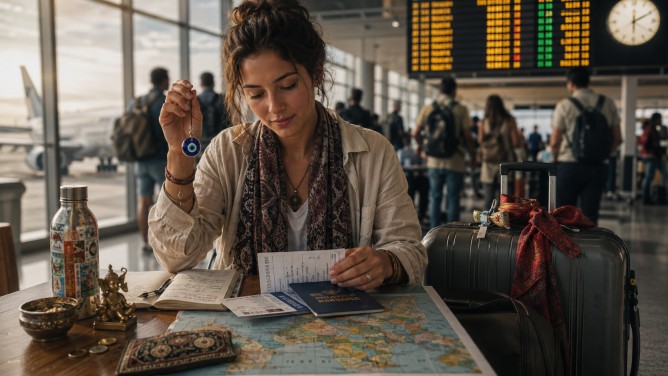
Travel often carries with it a sense of excitement, filled with traditions and small rituals that add a special touch to the journey. Across various cultures, travelers have developed unique beliefs intended to bring good luck and ensure safety while on the road. Here are seven intriguing travel superstitions still practiced around the globe.
In certain Balkan regions, garlic is seen as a powerful protector against negative energy and the evil eye. Travelers often tuck a clove of garlic into their luggage to ward off bad luck. Similarly, many flyers adhere to the ritual of touching or tapping the outside of a plane before boarding, a gesture believed to invite good fortune and provide comfort to nervous passengers. Additionally, stepping onto an aircraft with the right foot first is a common practice for those who wish to start their journey on a positive note.
Some customs involve family participation, such as the tradition observed in parts of the Middle East and the Balkans, where families sprinkle or pour water behind a departing traveler. This act symbolizes a smooth and safe trip, with the water’s flow representing a wish for the traveler’s safe return. Numbers also play a significant role in travel superstitions. The number 13 is often avoided in many Western countries due to its association with bad luck, while in China, the number 4 is often shunned because it sounds similar to the word for death. In Italy, the number 17 holds similar negative connotations.
Other superstitions focus on the immediate moments before departure. In Slavic cultures, a brief pause to sit on packed luggage is customary, giving travelers a moment to gather their thoughts and mentally prepare for the journey ahead. Conversely, sweeping the floor right after someone leaves is considered unlucky in several cultures, as it is believed this action might symbolically sweep away the traveler’s good fortune or affect their safe return.
Though these customs lack scientific backing, they remain an intriguing part of travel culture. For many, these rituals are not about whether the superstition will genuinely work but about maintaining family traditions, preserving cultural identity, and embracing the thrill of embarking on a new adventure.